The 20% Down Payment 'Rule' Was Never Really a Rule — Here's Where It Came From
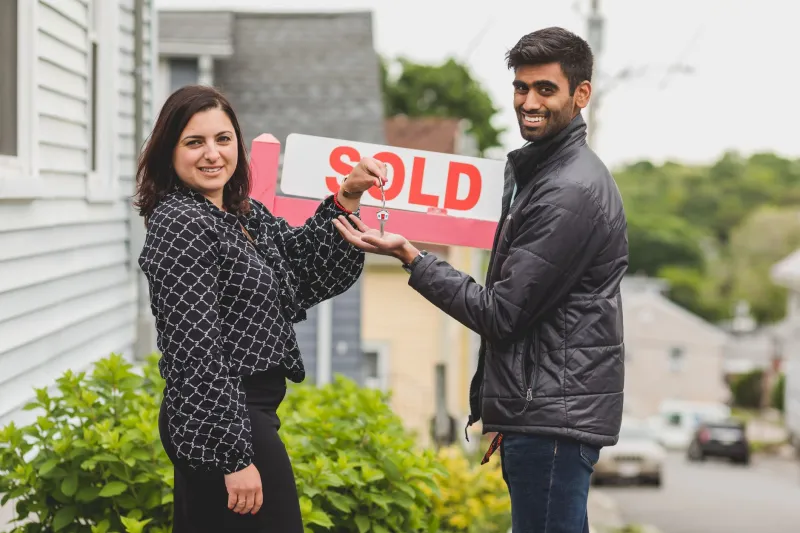
Ask almost any first-time homebuyer what they're working toward and they'll give you a number: 20%. That's the down payment threshold that lives rent-free in the American financial imagination. Save up 20% of the purchase price, the thinking goes, and then — only then — are you ready to buy a home.
It's repeated by parents, echoed in personal finance content, and treated like a law of nature. There's just one problem: it hasn't been an actual requirement for most buyers in a very long time, and the financial logic behind treating it as a universal goal doesn't hold up the way people assume.
Where the 20% Figure Actually Came From
The 20% down payment has real historical roots, which is part of why it stuck around so stubbornly. In the decades before World War II, mortgage lending in the United States was genuinely restrictive. Banks typically required large down payments — often 50% or more — and offered short loan terms with balloon payments at the end. Homeownership was, by design, a wealthy person's game.
After the war, the federal government moved aggressively to expand homeownership as both an economic policy and a social one. Programs through the FHA (Federal Housing Administration) and the VA (Veterans Administration) introduced longer loan terms and lower down payment requirements to bring returning veterans and working-class families into the market. The 20% figure emerged during this era partly as a threshold that triggered a specific lending structure — loans below that down payment amount carried higher perceived risk for lenders.
Over time, that structural benchmark became cultural doctrine. By the time the baby boomers were buying their first homes, 20% had transformed from a specific lending-industry standard into something that felt like common sense wisdom passed from one generation to the next.
What Actually Happened to the Requirement
The financial landscape changed dramatically, but the folklore didn't follow.
The FHA has offered loans with down payments as low as 3.5% since its earliest programs, and those options have only expanded over time. Conventional loans backed by Fannie Mae and Freddie Mac have offered 3% and 5% down options for qualifying buyers for years. VA loans — available to eligible veterans and active-duty service members — frequently require zero down. USDA loans for rural and suburban areas offer similar zero-down pathways.
According to data from the National Association of Realtors, the median down payment for first-time homebuyers has hovered between 6% and 8% for most of the past decade. The majority of people buying their first home are not putting down 20%. They never were, in the modern era.
The Cost of Waiting for a Number That Isn't Required
Here's where the myth gets genuinely expensive. In high-cost housing markets — which describes a growing portion of the United States — the gap between a 6% down payment and a 20% down payment can represent years of additional saving time. During those years, home prices in many markets have risen faster than most people can realistically save.
The irony is that waiting to hit 20% in a rising market can leave buyers further behind than if they'd bought earlier with less down. The "responsible" choice, in other words, can produce worse financial outcomes than the choice that feels riskier.
So Why Does the 20% Myth Persist?
There are a few reasons this belief has such staying power.
First, there's a legitimate kernel of truth underneath it. Putting down less than 20% on a conventional loan typically triggers private mortgage insurance, or PMI — an additional monthly cost that protects the lender if you default. PMI is real, it adds to your monthly payment, and it's worth factoring into your decision. But it's not permanent. Once you've built enough equity, you can request its removal. And for many buyers, the math of paying PMI while building equity in a home beats the alternative of paying rent while saving toward a number that keeps moving.
Second, the advice is genuinely well-intentioned. Financial guidance that tells people to save more before making a large purchase isn't wrong on its face — it's just often applied too rigidly to a situation with more variables than a simple rule can capture.
Third, the financial industry itself has mixed incentives. Buyers who wait longer save more, which is good for banks. And buyers who feel underprepared are more likely to defer to the professionals around them, which is good for the people charging fees on those transactions.
What the Decision Actually Involves
The honest answer is that the right down payment depends on your specific situation: your income stability, your local market, your loan options, your other financial priorities, and how long you plan to stay in the home. For some buyers, 20% down genuinely makes sense. For many others, waiting to reach that number costs more than the PMI they're trying to avoid.
The 20% figure isn't wrong as a savings goal. It's wrong as a prerequisite — a gate that people believe they must pass through before they're allowed to participate. That gate was built for a different era of lending, and it was never as universal as the story around it suggests.
The Takeaway
The 20% down payment rule is less a rule than a cultural relic — one that made more sense in a world where it reflected actual lending requirements. Today, it mostly reflects an old story that gets repeated because it sounds responsible. Understanding where it came from, and what's actually available to buyers right now, is worth a lot more than waiting for a number that the market moved on from decades ago.