America's 'Safest' Streets Are Actually Where Kids Get Hurt Most — The Cul-de-Sac Safety Myth
America's 'Safest' Streets Are Actually Where Kids Get Hurt Most — The Cul-de-Sac Safety Myth
Every spring, millions of American families begin their house hunt with one clear priority: finding a home on a quiet cul-de-sac. The dead-end street has become the gold standard of family-friendly neighborhoods — a place where children can ride bikes safely, parents don't worry about speeding traffic, and the American suburban dream feels most secure.
But here's what most families don't know: traffic engineers, emergency responders, and child safety researchers have been quietly documenting a very different reality about cul-de-sacs for years. The data tells a story that contradicts nearly everything we believe about these supposedly safe streets.
The Numbers Behind the Neighborhood Dream
According to the National Highway Traffic Safety Administration, residential cul-de-sacs actually experience higher rates of certain types of accidents involving children than traditional through-streets. The reason isn't what you'd expect.
"Parents assume less traffic equals more safety, but that's not how accident statistics work," explains Dr. Sarah Chen, a traffic safety researcher at the University of Michigan. "Cul-de-sacs create a false sense of security that leads to riskier behavior."
The data shows that children playing on cul-de-sacs are more likely to be injured by backing vehicles, delivery trucks with limited visibility, and what researchers call "inattentional accidents" — incidents that occur precisely because drivers expect these streets to be completely safe.
How Dead-End Streets Create Unexpected Dangers
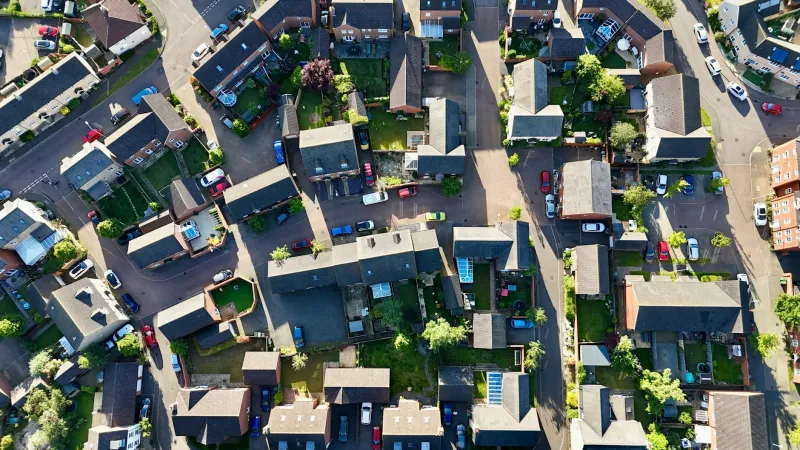
The design of cul-de-sacs — those circular turnarounds that seem so family-friendly — actually creates several hidden hazards that straight streets avoid.
First, there's the backing problem. Every vehicle that enters a cul-de-sac must eventually back up or execute a multi-point turn to leave. Emergency medical technicians report that backing accidents involving children are significantly more common on dead-end streets, often because kids assume parked cars won't move.
Second, delivery and service vehicles create unexpected risks. UPS trucks, garbage collectors, and moving vans navigate cul-de-sacs differently than regular streets, often with limited visibility around the curved end. These larger vehicles account for a disproportionate number of the serious accidents on dead-end residential streets.
The Emergency Response Reality
Fire departments and ambulance services have long understood something that real estate agents rarely mention: cul-de-sacs can be dangerous when seconds count.
"Response times on dead-end streets are measurably longer," says Captain Mike Rodriguez of the Phoenix Fire Department. "If there's a car parked wrong, or if we encounter another emergency vehicle, we can get trapped. That's time we can't afford when dealing with a medical emergency or house fire."
The National Fire Protection Association has documented cases where emergency vehicles couldn't access homes quickly because of cul-de-sac design limitations. Some fire departments now factor street design into their response planning, treating certain cul-de-sacs as higher-risk locations.
The Social Isolation Factor
Child development researchers have identified another unexpected consequence of cul-de-sac living: social isolation. While parents choose these streets hoping for tight-knit communities, studies show that children on dead-end streets often have smaller social networks and fewer opportunities for independent mobility.
"Kids on through-streets learn to navigate their neighborhood more effectively," explains Dr. Jennifer Walsh, a child development specialist at Stanford. "They encounter more diverse social situations and develop better spatial awareness. Cul-de-sac kids often become dependent on parents for transportation to social activities."
Research from the University of California found that children living on cul-de-sacs were less likely to walk or bike to friends' houses, more likely to require parental supervision for outdoor play, and showed higher rates of what researchers termed "geographic anxiety" when navigating unfamiliar areas.
Why We Fell in Love with Dead-End Streets
The American obsession with cul-de-sacs traces back to post-World War II suburban planning, when developers marketed these streets as the ultimate in family safety and community building. The Federal Housing Administration actively promoted cul-de-sac designs in the 1950s and 1960s, believing they would create more stable, valuable neighborhoods.
"It was brilliant marketing," says urban planning historian Dr. Robert Kim. "Developers could build more houses per acre while selling the dead-end design as a premium safety feature. Parents felt good about paying extra for what seemed like obvious protection for their children."
The cul-de-sac became so associated with good parenting and responsible homebuying that questioning its safety felt almost un-American. Real estate listings still use phrases like "quiet cul-de-sac" as major selling points, and many buyers won't consider homes on through-streets.
What Actually Makes Streets Safer for Kids
Traffic safety experts point to different design features when identifying genuinely safe residential streets. Connected street networks with moderate, consistent traffic flow actually perform better in safety studies than isolated dead-end streets.
"The safest residential streets have good visibility, consistent traffic patterns, and multiple access points for emergency vehicles," explains transportation planner Lisa Park. "Counter-intuitively, streets with some regular traffic often see fewer accidents because everyone — drivers, pedestrians, and cyclists — maintains appropriate caution."
Neighborhoods with sidewalks, street lighting, and what planners call "natural surveillance" — windows and porches facing the street — consistently rank higher for child safety than secluded cul-de-sacs, regardless of traffic volume.
The Real Story About Street Safety
The truth about cul-de-sacs isn't that they're dangerous — it's that they're not automatically safer than other residential street designs. The safety benefits that families expect often don't materialize in practice, while unexpected risks emerge from the very features that seem most protective.
For families currently house-hunting, the lesson isn't to avoid cul-de-sacs entirely. Instead, it's to look beyond street design to the factors that actually predict neighborhood safety: active community engagement, good lighting, clear sight lines, and responsive emergency services.
The American dream of the perfect family street is real — it just might not look exactly like what we've been taught to want.