Your HOA Promises Property Value Protection — But the Data Tells a Different Story
Walk into any real estate office, and you'll hear the pitch: homes in HOA communities hold their value better, appreciate faster, and offer more predictable returns than properties without association oversight. It's become such accepted wisdom that many buyers specifically seek out HOA neighborhoods, assuming they're making a smart financial decision.
But after decades of research, economists have a surprising conclusion: the relationship between HOAs and property values is far more complicated than anyone wants to admit.
The Origin Story Nobody Remembers
Homeowners associations weren't created to protect property values—they were created to get around government regulations. In the 1960s, developers wanted to build communities with shared amenities like pools and tennis courts, but local governments didn't want the ongoing maintenance costs.
The solution was brilliant: create private mini-governments that could collect fees, maintain common areas, and enforce rules without burdening city budgets. The "property value protection" angle came later, as a marketing tool to sell the concept to skeptical homebuyers.
By the 1970s, the federal government was actively encouraging HOA development through FHA loan programs. Today, roughly 75% of new homes are built in HOA communities—not because buyers demanded them, but because it's often the only option developers offer.
What the Research Actually Shows
Here's where it gets interesting. Multiple academic studies have tried to measure HOA impact on property values, and the results are all over the map.
Some studies show HOA homes appreciating 5-6% faster than comparable non-HOA properties. Others show no significant difference. A few even show HOA homes underperforming the broader market, especially during economic downturns.
The most comprehensive analysis, published in the Journal of Real Estate Research, found that HOA premiums vary wildly by region, age of community, and type of amenities. New communities with desirable amenities showed positive effects. Older communities with aging infrastructure and high fees often showed negative effects.
 Photo: Journal of Real Estate Research, via www.rilsa.cz
The Reserve Fund Reality
Here's what most buyers never investigate: HOA financial health. Every association is supposed to maintain reserve funds for major repairs—roof replacements, pool renovations, road resurfacing. But many don't.
A 2019 study by the Community Associations Institute found that 70% of HOAs were underfunded for future capital improvements. When major repairs come due, associations have two choices: massive special assessments or deferred maintenance that hurts property values.
 Photo: Community Associations Institute, via images.squarespace-cdn.com
Imagine buying a $400,000 condo, then getting hit with a $25,000 special assessment for roof repairs two years later. It happens more often than you'd think, and it's perfectly legal. Your HOA contract probably gives the board authority to levy special assessments with minimal notice.
The Enforcement Double-Edged Sword
HOAs have legal powers that would make city governments jealous. They can fine you, place liens on your property, and in some states, even foreclose on your home for unpaid fees. This enforcement power is supposed to maintain standards and protect values.
But enforcement can backfire spectacularly. Stories of HOAs fining homeowners for children's chalk drawings, wrong shade of beige paint, or parking in their own driveways aren't urban legends—they're documented court cases. Overly aggressive enforcement can create negative publicity that hurts the entire community's reputation.
The Amenity Depreciation Problem
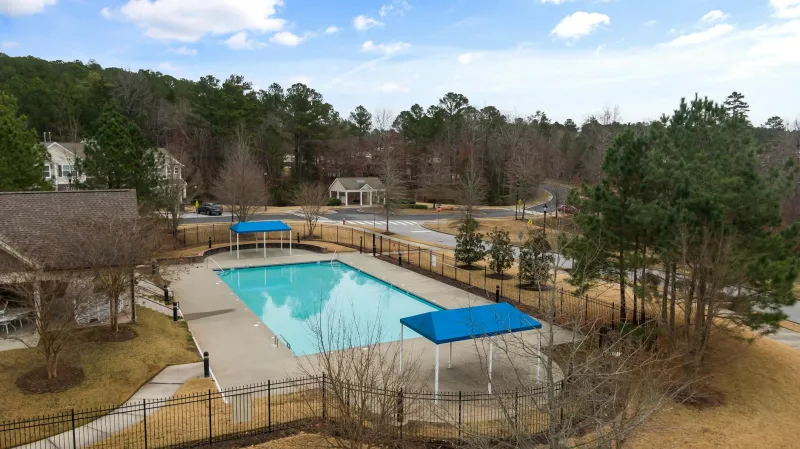
Many HOA communities sell themselves on amenities: pools, fitness centers, golf courses, tennis courts. These features do attract buyers initially, but amenities age and become liabilities over time.
That beautiful community pool from 1995 needs major renovation by 2020. The fitness center equipment becomes outdated. Golf courses require constant maintenance and irrigation. What started as selling points become expensive obligations that drain reserve funds and require higher fees.
The Fee Creep Factor
HOA fees almost never go down, and they tend to rise faster than inflation. The average HOA fee has increased about 5% annually over the past decade, compared to 2-3% inflation. Over a 30-year mortgage, that compounds significantly.
Buy a home with $200 monthly HOA fees, and you might be paying $400+ monthly by the time you're ready to retire. Those rising fees can actually hurt resale values, especially if nearby non-HOA communities offer similar amenities through municipal services.
When HOAs Actually Help
Despite these concerns, HOAs can provide real value in specific situations:
- New communities with well-planned amenities and adequate reserve funding
- Condo buildings where shared maintenance is genuinely necessary
- Communities with unique features (waterfront, golf course) that require specialized management
- Areas where municipal services are limited and HOA services fill genuine gaps
The key is doing your homework before buying.
Questions Every Buyer Should Ask
Before you assume that HOA automatically means better property values, investigate:
- What's the current reserve fund balance, and is it adequate for upcoming major repairs?
- How have fees changed over the past 5-10 years?
- Are there any pending special assessments or major capital projects?
- What's the HOA's enforcement history and reputation?
- How do comparable HOA and non-HOA properties perform in this specific market?
The Bottom Line
HOAs aren't automatically good or bad for property values—they're tools that can be managed well or poorly. The marketing promise of "protected property values" is often oversimplified.
Smart buyers look beyond the sales pitch and examine the specific HOA's financial health, management quality, and track record. Because when it comes to HOAs, the devil really is in the details—and those details can cost you thousands.