Your Perfect Suburban Neighborhood Was Actually Designed by Washington Bureaucrats
The Story We Tell Ourselves About Suburbia
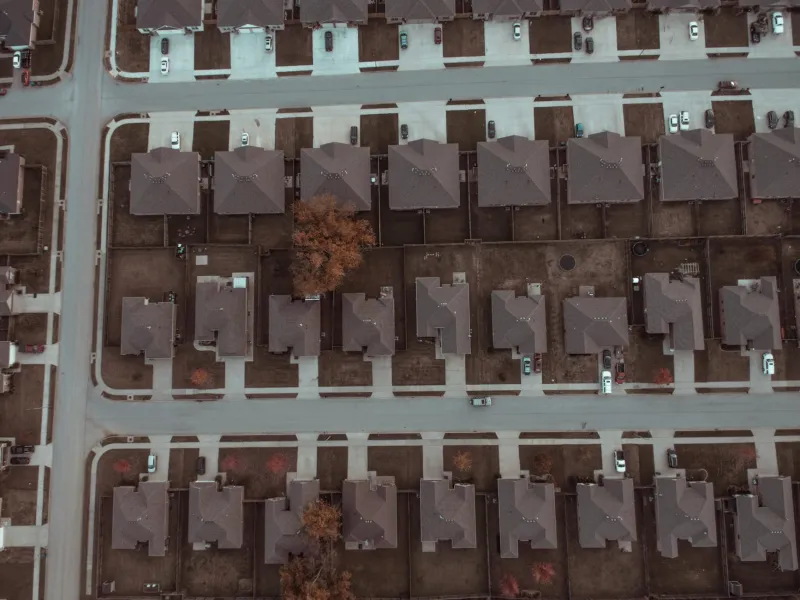
Drive through any American suburb and you'll see the same pattern: tree-lined streets, single-family homes with driveways, strip malls within driving distance, and highways connecting everything. Most of us assume this happened naturally—families wanted space, fresh air, and a piece of the American Dream, so they moved out of crowded cities.
But here's what actually happened: the suburban landscape we consider "normal" was deliberately engineered by federal agencies over several decades. What feels like organic growth was actually the result of specific government programs, targeted spending, and policy decisions that reshaped where and how Americans live.
The Federal Programs That Built Your Neighborhood
The suburban boom didn't start with individual families making housing choices. It started in Washington, D.C., with a series of federal programs designed to stimulate the economy and house returning World War II veterans.
The GI Bill, passed in 1944, offered low-interest, zero-down-payment home loans exclusively to veterans. But here's the catch: these loans came with strict requirements about where and what type of homes qualified. The Federal Housing Administration (FHA) created detailed guidelines that heavily favored new construction in undeveloped areas—essentially suburbs—while making it nearly impossible to get federally backed loans for homes in established urban neighborhoods.
The FHA's underwriting manual literally included maps marking urban areas as "risky" investments, a practice known as redlining. Meanwhile, suburban developments received the highest ratings for loan approval. This wasn't accident—it was policy designed to direct American housing patterns.
How Highways Carved Up America
The Interstate Highway Act of 1956 sealed the deal. Sold to the public as a national defense project, the highway system was actually the largest suburban development program in American history. The federal government spent $500 billion (in today's money) building roads that made suburban living practical while simultaneously cutting through and isolating urban neighborhoods.
These weren't just transportation projects—they were suburban enablement projects. Highway planners worked closely with suburban developers to ensure new roads served emerging residential areas. The result? Living in the suburbs became easier than living in cities, not because suburbs were naturally better, but because the federal government spent decades making them more accessible and affordable.
The Racial Engineering Hidden in Plain Sight
Perhaps the most shocking aspect of suburban development was how explicitly racial it was. FHA loan guidelines included language prohibiting loans in "racially mixed" neighborhoods and required developers to include racial covenants in suburban home deeds. These covenants legally prevented Black families from buying homes in suburban developments, even if they could afford them.
Meanwhile, urban renewal programs were demolishing established Black neighborhoods in cities, often to make room for highways leading to white suburbs. The federal government was simultaneously making suburban homeownership easier for white families while making urban homeownership harder for everyone else.
This wasn't a side effect of suburban policy—it was the point. Government officials explicitly believed that racially segregated suburbs would create more stable property values and stronger communities. The suburban American Dream was designed to be exclusionary from day one.
Why This Matters for Today's Housing Market
Understanding the real history of suburban development explains why American housing patterns look so different from other developed countries. In Europe and Asia, dense urban living is common and affordable. In America, we've spent 80 years subsidizing sprawl while underinvesting in urban housing.
This engineered preference for suburban living created the modern American real estate market. Property values, school funding, and even voting patterns still reflect the geographic segregation that federal policy created decades ago. When people talk about "naturally occurring" housing preferences, they're actually talking about the lasting effects of deliberate government intervention.
The Persistence of Suburban Mythology
Why do most Americans still believe suburban growth was organic? Because the policies worked exactly as intended. By the 1960s, suburban living had become so normal that people forgot it was artificially created. The programs that built suburbia were designed to feel invisible—families experienced them as opportunities and choices, not as government direction.
Plus, admitting that suburbs were federally engineered undermines some deeply held American beliefs about free markets and individual choice. It's more comfortable to believe that millions of families independently chose similar lifestyles than to acknowledge that government policy shaped those choices.
The Real Takeaway
Your suburban neighborhood isn't the natural result of American preferences—it's the successful outcome of one of the largest social engineering projects in U.S. history. Understanding this doesn't make suburban living wrong, but it does explain why American housing looks the way it does and why changing those patterns is so difficult.
The next time someone argues that Americans "naturally" prefer suburban single-family homes, remember that those preferences were carefully cultivated by federal policy over decades. The American Dream of suburban homeownership wasn't discovered—it was designed.