For Most of American History, Renting Was the Default — Homeownership Was Engineered in a Single Decade
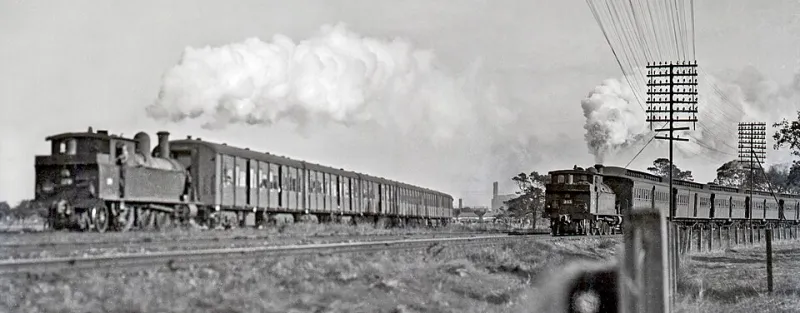
Photo: Unknown authorUnknown author, Public domain, via Wikimedia Commons
Ask most Americans whether owning a home is a core part of the national identity and they'll say yes without hesitation. It's woven into how we talk about success, stability, and adulthood. The phrase "the American Dream" and the image of a owned home are so thoroughly fused that separating them feels almost unpatriotic.
Which makes the actual history so startling. Because for most of this country's existence, the majority of Americans didn't own their homes. They rented. And the culture of ownership that feels ancient and inevitable was, in reality, deliberately constructed by the federal government in a roughly ten-year window after World War II.
What the Numbers Actually Show
In 1900, the U.S. homeownership rate was around 46 percent. By 1940 — after 140 years of the American experiment — it had barely moved, sitting at roughly 43 percent. That means for the better part of a century and a half, more Americans were renters than owners.
This wasn't a sign of failure or poverty. It was simply the norm. Cities were built around rental housing. Apartments, boarding houses, and rented rooms were how ordinary working Americans lived. Ownership was more common in rural areas, but in the growing urban centers where economic opportunity was concentrated, renting was the default arrangement for the vast majority of the population.
The idea that there was some deep, universal American hunger for homeownership that just needed the right conditions to express itself? The data from those 150 years doesn't really support it.
The Decade That Changed Everything
Then came the postwar period, and the numbers moved in a way they never had before or since.
By 1960, the homeownership rate had jumped to around 62 percent — a nearly 20-point increase in roughly fifteen years. That kind of shift doesn't happen organically. It was the result of a coordinated set of government interventions that fundamentally restructured how Americans could access and finance property.
The pieces came together in sequence. The Federal Housing Administration, established in 1934, had already begun standardizing the 30-year fixed-rate mortgage, which made monthly payments small enough for middle-class families to manage. Before that, mortgages were typically short-term, high-down-payment instruments that most wage earners couldn't access.
 Photo: Federal Housing Administration, via c8.alamy.com
Then came the GI Bill in 1944, which offered returning veterans low-interest, no-down-payment home loans on a massive scale. Millions of men who might otherwise have rented indefinitely suddenly had a direct, government-backed path to ownership.
 Photo: GI Bill, via www.qc.cuny.edu
The VA loan program was paired with the FHA's expanding role in insuring mortgages, which encouraged banks to lend more freely. The federal government simultaneously invested heavily in highway infrastructure, making suburban land accessible and affordable in ways that urban housing wasn't. The suburbs weren't just built — they were subsidized.
The Policy Had a Target Audience
Here's the part of the story that gets left out of the inspirational version: those programs were not designed to benefit all Americans equally.
FHA underwriting guidelines from the era explicitly steered mortgage insurance away from racially mixed or Black neighborhoods — a practice that became known as redlining. The suburbs that were built with federal support were, by design and policy, largely off-limits to Black Americans. The homeownership boom was real, but it was engineered to flow to a specific demographic.
This matters for understanding the wealth gap that persists today. The government-manufactured ownership boom created a generation of white middle-class families who built equity during one of the strongest decades of real estate appreciation in American history. Families excluded from that system didn't get the same head start — not because of choices they made, but because the policy was built that way.
How an Engineered Shift Became "Natural"
By the 1960s and 70s, the cultural transformation was complete enough that people had stopped noticing it was a transformation. A generation had grown up in owned homes in the suburbs. Their parents talked about it as achievement. Their schools reinforced it. Television showed it as the backdrop of normal American life.
The financial industry, the real estate lobby, and home builders all had enormous incentives to keep the ownership culture strong and growing. Renting got reframed — subtly but persistently — as a temporary state, something you did while you were getting your life together, not a legitimate long-term choice.
The political logic was also durable. Homeowners, the thinking went, were more invested in their communities, more conservative about property values, more stable as citizens. Promoting ownership served social and political goals that extended well beyond housing.
What This Means for How You Think About Your Own Choices
None of this is an argument against buying a home. For the right person in the right market at the right time, ownership makes excellent financial sense. The 30-year mortgage and the equity it builds have genuinely improved millions of lives.
But the feeling that homeownership is a natural human preference — that renting is somehow lesser, or that buying is the obvious choice for any serious adult — that feeling has a birthday. It was born in the late 1940s, shaped by specific legislation, promoted by specific industries, and handed down to subsequent generations as though it had always been true.
Understanding that doesn't change what you should do with your money. It just means the decision is actually yours to make — not a cultural inheritance you're obligated to follow.