The Invisible Rules Written 50 Years Ago That Still Decide Where You Can Live—And Who Can Afford To
The Myth of Natural Neighborhoods
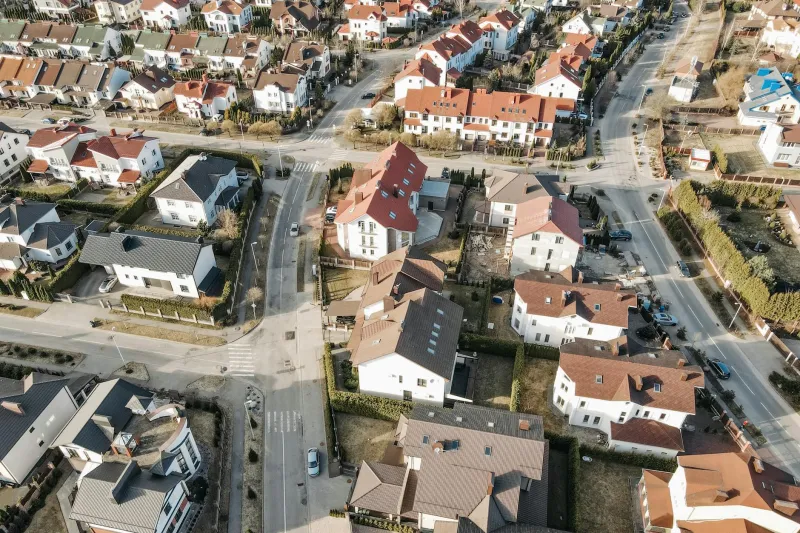
Drive through any American suburb and you'll see what looks like organic community development: tree-lined streets with similar-sized houses, corner commercial districts, maybe a few apartments near the main road. Residents often describe their neighborhood's "character" as something that evolved naturally over generations.
The reality is far different. Nearly every aspect of what you see—from the size of front yards to the absence of corner stores—was mandated by legal codes written decades ago by municipal planners who were explicitly trying to control who could afford to live where.
The Great Zoning Experiment
American zoning as we know it began in the 1920s, but the rules that shape today's neighborhoods were mostly written between 1945 and 1970. Post-war planners, influenced by both genuine urban planning theory and less admirable social goals, created a system of land use controls more restrictive than almost anywhere else in the world.
Single-family zoning—the rule that only detached houses can be built in residential areas—now covers roughly 75% of residential land in most American cities. This wasn't inevitable or traditional. Before zoning, American neighborhoods typically mixed housing types: small apartments above shops, boarding houses next to family homes, and commercial uses scattered throughout residential areas.
The Hidden Mathematics of Exclusion
Zoning codes don't explicitly mention income or demographics, but their mathematical requirements create powerful economic filters. Minimum lot sizes, setback requirements, parking mandates, and restrictions on housing types work together to ensure that only people above certain income levels can afford to live in most neighborhoods.
Consider a typical suburban zoning code: houses must sit on lots of at least 10,000 square feet, with 25-foot front setbacks and 10-foot side yards. Each unit needs two parking spaces. No apartments, no duplexes, no accessory dwelling units. These rules don't mention money, but they guarantee that housing will be expensive.
The math is straightforward: larger lots cost more, bigger setbacks require more land per house, parking requirements add construction costs, and limiting housing types prevents more affordable options. A neighborhood zoned this way simply cannot produce housing that's affordable to middle-class families, regardless of construction costs or market conditions.
The Parking Mandate Nobody Notices
Perhaps no zoning requirement is more invisible or more powerful than parking minimums. Most American zoning codes require specific numbers of parking spaces for every type of building: two spaces per house, one space per apartment unit, specific ratios for offices and retail.
These requirements, written when cars were becoming universal but before anyone understood their environmental or social costs, now control the basic shape of American communities. They spread buildings apart, make walking less practical, increase construction costs, and consume enormous amounts of land.
In many cities, there are now more parking spaces than households. This isn't market demand—it's legal mandate. Developers must provide parking whether tenants want it or not, and the costs get built into everyone's rent and purchase prices.
The Commercial Desert Effect
Zoning's separation of residential and commercial uses created the car-dependent lifestyle that most Americans now consider normal. Before comprehensive zoning, corner stores, small offices, and neighborhood services were woven throughout residential areas.
Modern zoning typically prohibits any commercial use in residential zones, forcing residents to drive for basic needs. This wasn't an accident—planners believed that separating uses would create quieter, more pleasant neighborhoods. They succeeded, but also created communities where walking to buy milk or coffee became impossible.
How These Rules Became Permanent
Once neighborhoods were built according to these zoning rules, changing them became politically difficult. Existing residents, having invested in homes under one set of rules, resist changes that might affect property values or neighborhood character. This creates a powerful status quo bias that keeps 1950s planning decisions locked in place.
Local politics amplify this effect. Homeowners vote in municipal elections at much higher rates than renters, and they tend to oppose new housing that might increase density or change neighborhood character. The result is that zoning codes from decades ago continue to control new development today.
The Generational Wealth Machine
These zoning patterns don't just control housing types—they create and maintain wealth inequality across generations. Families who bought homes in the 1970s and 80s under these restrictive zoning rules now benefit from artificial scarcity that inflates their property values.
Meanwhile, younger generations face housing markets where the same zoning restrictions that built their parents' wealth now make homeownership unaffordable. The system that created middle-class stability for one generation is actively preventing it for the next.
The Climate Connection
Zoning's car-dependent development patterns have enormous environmental consequences that weren't considered when the rules were written. Sprawling, single-family neighborhoods require more infrastructure per resident, generate more vehicle miles traveled, and consume more energy than denser, mixed-use communities.
As cities try to meet climate goals, they're discovering that their zoning codes actively prevent the kind of development that would reduce emissions. The legal framework built for a different era now conflicts with environmental necessities.
Cities Fighting Their Own Rules
Across the country, cities are beginning to reform zoning codes that no longer serve their residents' needs. Minneapolis eliminated single-family zoning citywide. Portland allows duplexes in all residential areas. California passed laws overriding local zoning to allow accessory dwelling units.
These changes face fierce political resistance from residents who benefited from the old system. The fights reveal how deeply embedded these planning decisions have become in Americans' assumptions about what neighborhoods should look like.
What Comes Next
The zoning system that shaped post-war America is slowly being recognized as a historical artifact that no longer serves modern needs. Housing affordability, climate change, and demographic shifts are forcing cities to reconsider rules that seemed permanent just a few years ago.
But change is slow and uneven. The legal and political structures that embedded 1950s planning decisions into American communities won't disappear overnight. Understanding how we got here is the first step toward imagining something different—neighborhoods that serve residents rather than restricting them.